Problem:
At a country club in Durham, NC, the owners were faced with an issue that had persisted for over a decade: a leaking pool. These leaks not only resulted in high costs due to constant water replenishment but also posed a risk of soil erosion under the pool, which could lead to more severe structural issues in the future. The club's pool had a unique design with an offset deep end connected to the shallow area by a joint. This joint had been a recurring issue, necessitating annual sealing efforts that contributed to the club's maintenance expenses. As the problem worsened with the pool shelf settling more each year, it became clear that a more permanent solution was needed. Recognizing the urgency of the situation, Triangle Concrete Solutions was contacted to explore potential remedies.
To prepare for this project, Triangle Concrete Solutions pulled in JDS Consulting to conduct soil studies. Their team utilized Ground Penetrating Radar (GPR) scans, which discovered large voids, approximately two to three feet below the joint, extending 24 inches around the expansion joint. These voids were likely caused by ongoing water loss from the pool that had persisted over the decade.
Solution:
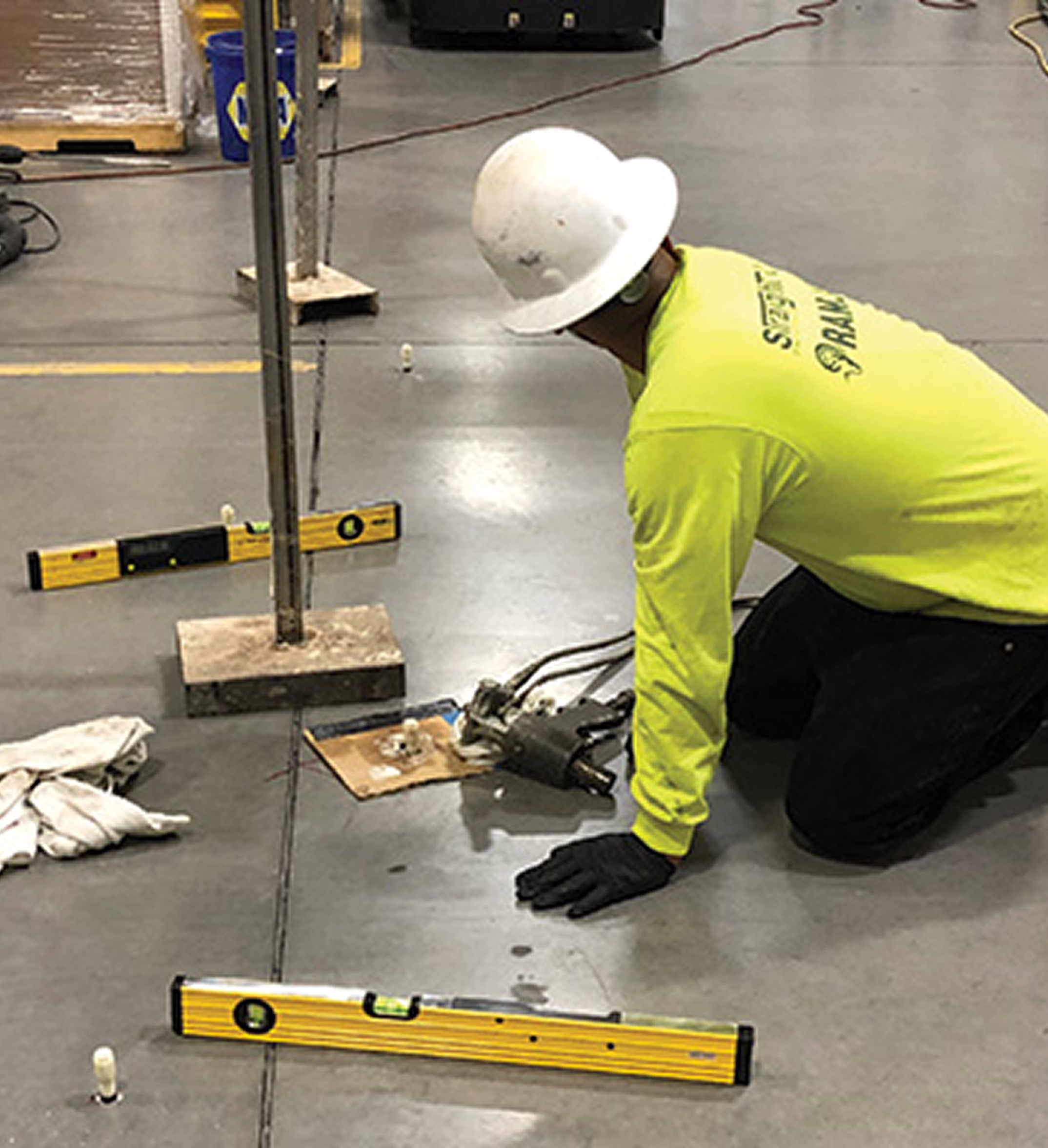
Thanks to the findings from JDS Consulting, Triangle Concrete Solutions was able to devise a repair plan backed by soil data. They began by drilling through the 18-inch-thick slab of the pool and injecting NCFI-2.2SH. The injections were strategically placed in a crisscross pattern on either side of the joint, targeting depths between two to four feet, where the void was located. The success of the injections was monitored by observing the material's travel, which was visible coming up through the pre-drilled relief lines along the joint. This was a clear indication that the polyurethane had traveled adequately through the voids, expanding and filling up from the soil to the surface, thus stabilizing the underlying area and sealing off any pathways for water to escape.
Results:
The entire injection process was completed in just one day, although this did not include the time taken to drain the pool, which was handled separately. Following the stabilization process, Expert Aquatics of NC took over to seal the expansion joint, thereby ensuring that the repair was both comprehensive and durable.
This project was not only completed quickly, but also sealed the pool from the leaks that had plagued the country club for years.
Reflecting on the project, the outcomes were highly favorable. The club not only saved on the recurrent costs of filling the pool and sealing the joint annually but also mitigated the risk of potential catastrophic damage due to soil erosion. This project serves as a testament to the effectiveness of combining expert engineering assessments with advanced construction techniques to solve complex problems. The lessons learned here highlight the importance of proactive maintenance and the use of innovative materials and methods in the field of construction and repair.